Trusted by Leading Institutions





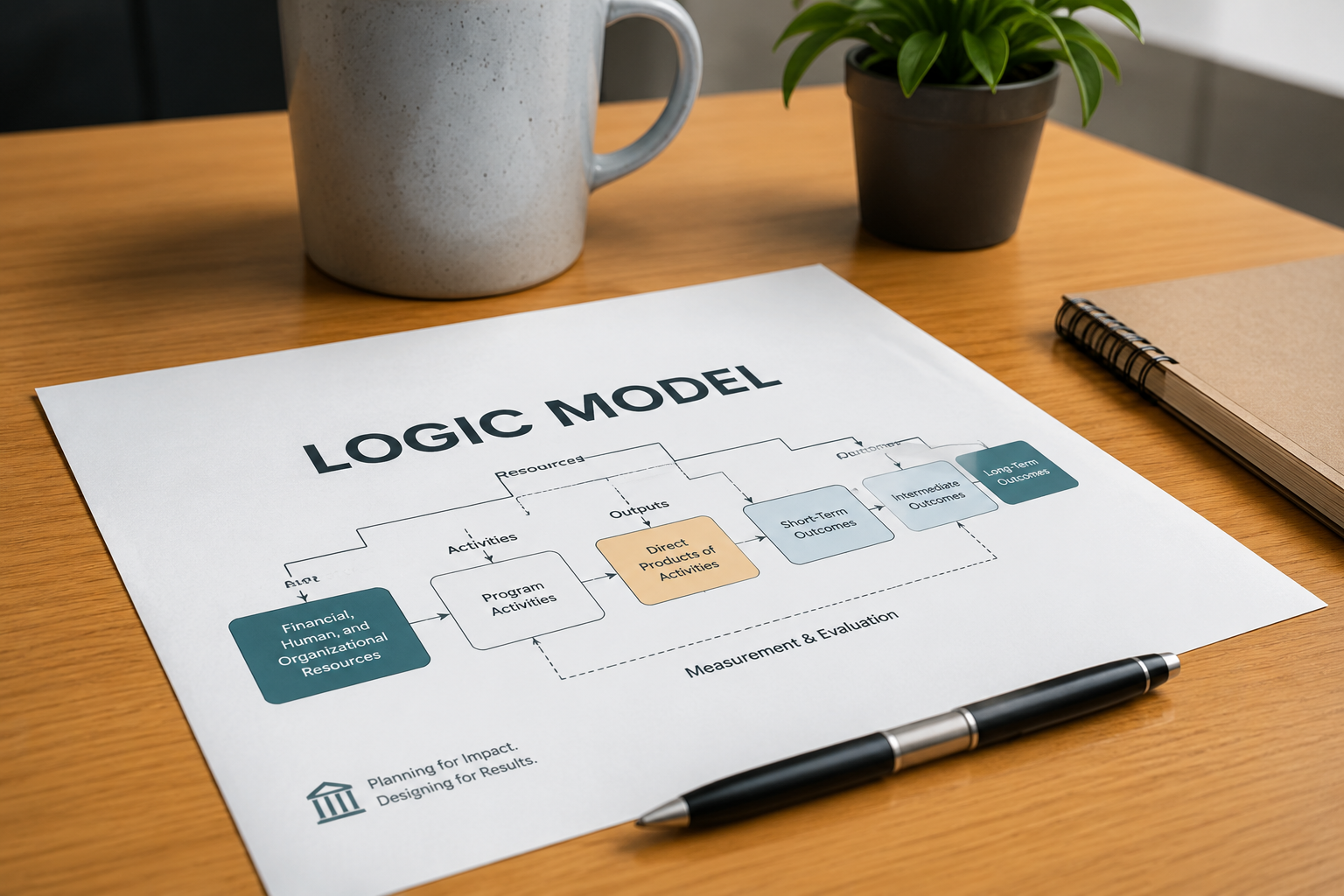
Develop a clear program logic model that connects your resources, activities, outputs, and intended outcomes. Our consultants help organizations create practical frameworks that improve planning, strengthen grant proposals, and support long-term program success.
As part of our Program Evaluation Consulting services, we develop logic models that establish measurable outcomes, guide evaluation strategies, and support long-term program improvement.
The resources that make your program possible. Funding, staff, technology, partnerships, and materials that support implementation.
The work your organization delivers. Programs, services, workshops, training, and other planned activities.
The immediate results of your activities. Participation, services delivered, products created, or milestones completed.
The meaningful changes your program aims to achieve. Short-, intermediate-, and long-term improvements for participants, organizations, or communities.
Create customized logic models aligned with your program goals and organizational strategy.
Map the pathway from activities to meaningful and sustainable community impact.
Identify and organize short-, intermediate-, and long-term outcomes that drive results.
Define measurable indicators to track progress and program success.
Engage key stakeholders to build a shared understanding of logic and expected results.
Deliver professional, funder-ready logic models for proposals and reports.
Building a strong logic model is the first step toward a successful evaluation strategy. Organizations often continue with Evaluation Plans for Grants to define data collection and reporting methods or engage External Evaluation Services for independent assessment and validation.
Clarifies program goals and expected results.
Aligns stakeholders around a shared vision.
Improves strategic planning and decision-making.
Strengthens grant proposals and funding applications.
Supports evaluation readiness and data collection.
Creates a foundation for long-term measurable impact.
A completed logic model provides the framework needed to develop comprehensive Evaluation Plans for Grants and prepare organizations for Federal Grant Evaluation Support , performance reporting, and compliance requirements.
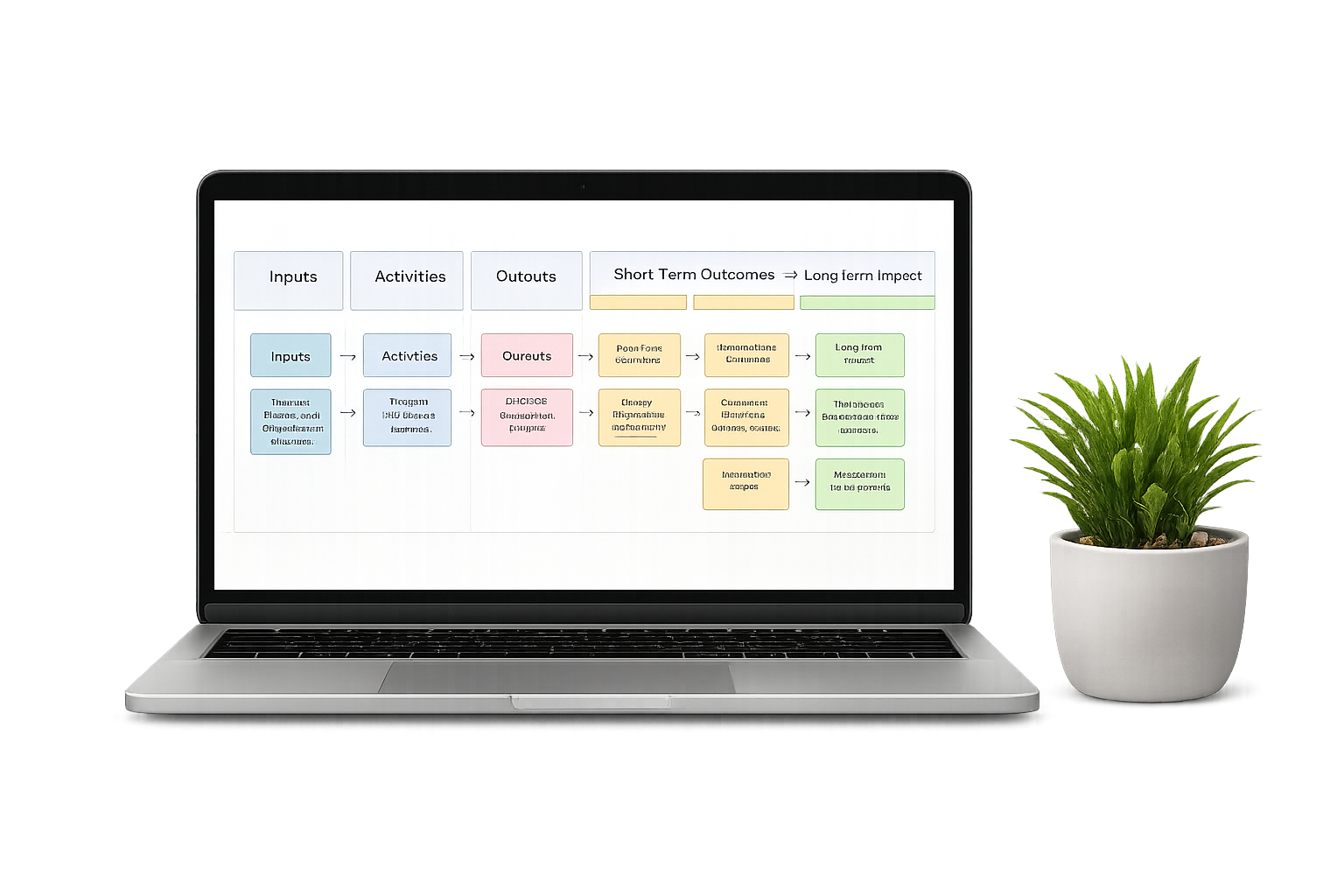
What you invest (staff, time, money, partners, materials).
What you do to implement your program.
The direct products or services from your activities.
Changes in knowledge, attitudes, or skills.
Changes in behavior, practice, or systems.
The ultimate change you aim to achieve.
Grounded in research and best practices.
Skilled in program logic, theory of change, and outcomes mapping.
We work closely with your team to ensure ownership and clarity.
Deep understanding of funder expectations and requirements.
Systematic methods that ensure credible and reliable results.
Clear, visual logic models you can use with confidence.
A logic model is a visual framework that connects your program's resources, activities, outputs, and intended outcomes. It helps organizations plan strategically, communicate program goals, and demonstrate how activities lead to measurable results.
A well-designed logic model provides clarity for program planning, aligns stakeholders around shared objectives, and creates a structured roadmap for implementation. It also strengthens grant proposals by clearly communicating your program strategy.
A logic model illustrates the sequence of resources, activities, outputs, and outcomes within a program. A theory of change explains the underlying assumptions and reasoning behind how those activities are expected to create long-term impact. Together, they provide a comprehensive planning framework.
Many government agencies, foundations, and funding organizations request or strongly encourage logic models as part of the proposal process. A clear logic model helps reviewers understand your program design, expected outcomes, and overall implementation strategy.
Yes. We frequently develop or refine logic models for existing programs as part of our Program Evaluation Consulting services. Organizations preparing grant applications may also benefit from our Evaluation Plans for Grants service.
Yes. While a logic model is primarily a planning tool, it also provides a strong foundation for future program evaluation by identifying measurable outcomes, performance indicators, and expected results.
Looking for a complete evaluation strategy? Explore our Program Evaluation Consulting services.